An on-premises, GPU-accelerated creative strategy, image, audio, and video generation solution from Metrum AI, deployed on the Supermicro SuperWorkstation A+ Server AS -2115HV-TNRT with four AMD Radeon™ AI PRO R9700S GPUs.
Prepared in collaboration with AMD and Supermicro.
Executive Summary
Marketing teams are asked to ship more campaign variants, across more formats and more audiences, on shorter timelines than ever. The production model has not kept up. Creative work still moves through disconnected tools with a manual handoff at every stage, which stretches a campaign from days into weeks and puts the number of variants a team can test in direct competition with the deadline.
Metrum AI built this solution to compress that pipeline into a single workflow. One brand brief produces a complete campaign: creative strategy, audience segments, ad copy variants, display images, voiceover audio, and animated video. A strategy and image campaign completes in under 2 minutes on the reference configuration, because the image, audio, and video tracks generate concurrently rather than in sequence.
Everything runs inside the organization's own environment on a Supermicro SuperWorkstation A+ Server AS -2115HV-TNRT with four AMD Radeon™ AI PRO R9700S GPUs and the AMD ROCm™ software stack. Brand assets, unreleased product details, and creative briefs never reach an external API. Marketing organizations gain three advantages from that design: campaigns produced in minutes rather than weeks, variant volume that no longer carries a per-generation cost, and unambiguous control over proprietary brand material.
This brief describes the production problem, the solution, its architecture, and the outcomes marketing organizations can expect. It is written for marketing and brand executives, creative operations leaders, agency principals, and the infrastructure architects who will host the deployment. The figures in this brief come from a Metrum AI demonstration on the reference configuration in Table 3.
The Business Challenge
A modern campaign is not one asset. It is a strategy, several copy variants, a set of images sized for each platform, a voiceover, and a short video, often multiplied across audience segments. Producing that set by hand is where marketing budgets and calendars actually go.
Where Creative Teams Lose Time and Money Today
The constraint is the production model rather than the talent. Four gaps recur across in-house teams and agencies alike.
| Operational Gap | Business Consequence |
|---|---|
| The toolchain is fragmented across stages | Strategy, copy, image, audio, and video each live in a different tool with a manual handoff between them. Every handoff adds a queue, and the queues are where the calendar goes. |
| Variant count competes with the deadline | Each additional audience or platform variant costs more production hours, so teams test fewer versions than the media plan could actually use and leave performance on the table. |
| Iteration cycles are slow and expensive | A change to positioning cascades back through every downstream asset. Teams accept a weaker creative direction rather than pay for another full production pass. |
| Brand material leaves the organization | Cloud creative services require uploading logos, brand guidelines, unreleased product detail, and campaign strategy to third-party infrastructure, which many governance regimes do not permit. |
Table 1. Recurring gaps in campaign production and their cost to the marketing organization
Why Cloud-First Generative AI Falls Short for Brand Creative
Generative AI answers the speed problem, and most of it is delivered as a cloud API. For brand creative specifically, that delivery model raises three objections a marketing organization cannot resolve with a contract clause.
- A creative brief is competitive intelligence. It names the unreleased product, the positioning, and the audience strategy. Sending it to an external service exports the campaign before it launches.
- Ownership and rights need to be unambiguous. Legal and brand teams have to answer where an asset came from and what an external provider may do with the inputs. Local generation removes the question rather than answering it.
- Per-generation pricing penalizes exploration. Creative quality comes from producing more options than you ship. A cost model that charges for every attempt discourages exactly the iteration that improves the work.
Generating locally resolves all three, and it makes iteration effectively free once the hardware is in place.
The Market Shift: Creative Production Becomes Parallel
Three developments have made full-campaign generation practical inside an organization's own infrastructure.
- Open-weight generative models reached production quality. Compact image, audio, and video models now produce brand-usable output locally, so creative generation no longer depends on a frontier service behind an API.
- Multi-GPU parallelism collapses a serial pipeline. Image, audio, and video tracks run at the same time on separate GPUs instead of queueing behind one another, and queue time is where most of a campaign's elapsed time sits.
- Structured output and validation make generation dependable. A language model that returns a schema rather than prose, checked at every stage, turns a creative pipeline into something an operations team can run on a deadline.
These shifts change the economics of exploration. When another variant costs minutes rather than a production cycle, teams test the range the media plan deserves.
Solution Overview
The solution takes a brand brief and produces a complete, production-ready campaign package. It captures brand identity, product description, campaign objective, and style preferences, generates a full creative strategy, then generates every asset across three concurrent tracks and composites the results with brand overlays and platform sizing.
A human approval gate sits between strategy and asset generation. The creative team reviews the proposed direction, audience segments, copy variants, scene descriptions, and audio script, then decides which tracks to run before any assets are produced. The pipeline accelerates the work without removing creative judgment from the decision.
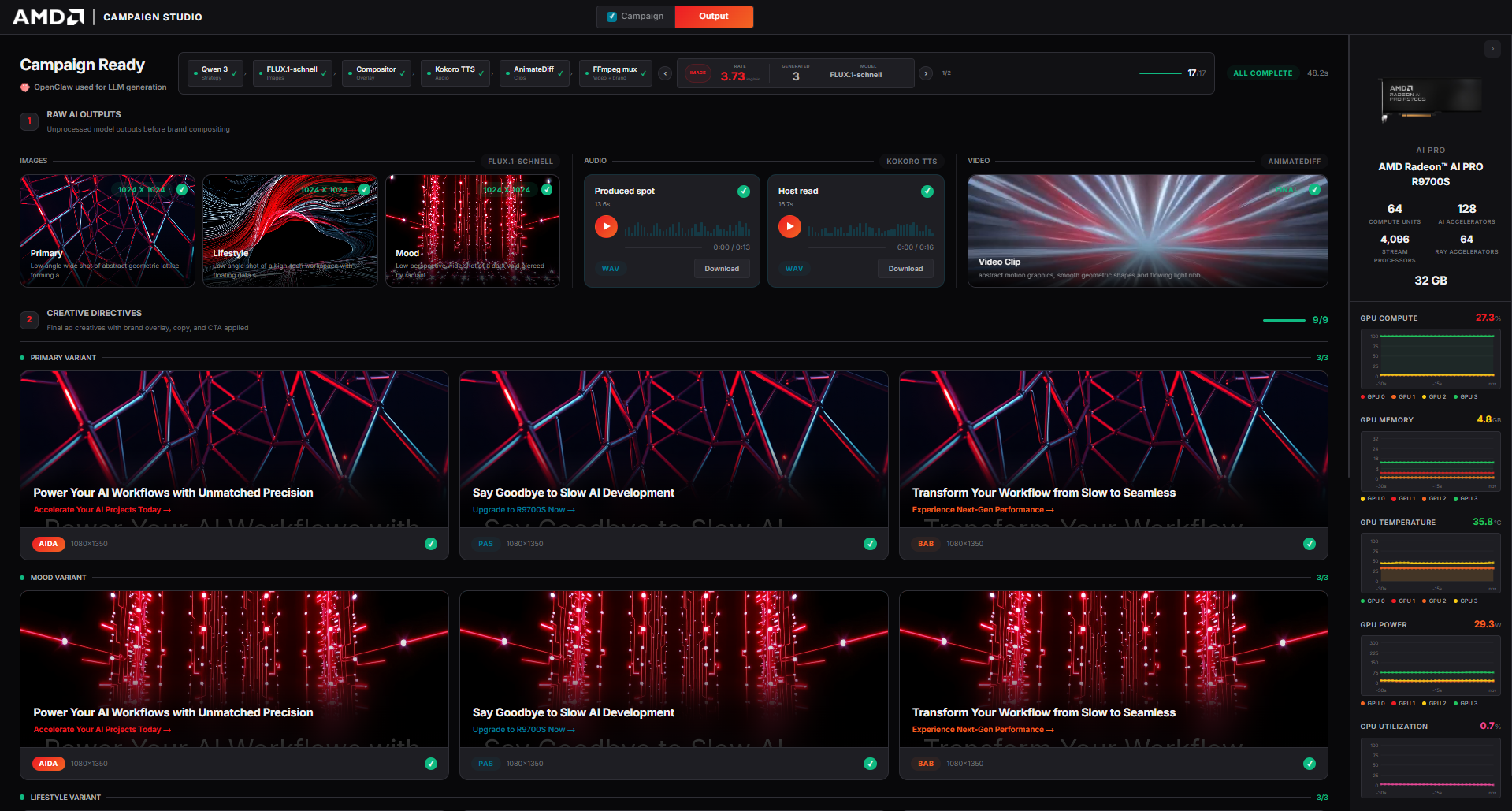
Figure 1. The output screen tracks each generation track in real time alongside live GPU telemetry
Campaign, brand, and assets shown are illustrative.
Capability Highlights
| Capability | What It Delivers |
|---|---|
| Brief to campaign in one workflow | One brand brief produces creative strategy, audience segments, ad copy variants, display images, voiceover audio, and animated video with no handoff between tools. |
| Reviewable creative strategy | The generated strategy arrives in tabbed sections covering direction, audiences, copy, scenes, audio, and tracks, so a creative lead can approve or redirect before assets are produced. |
| Concurrent multi-format generation | Image, audio, and video tracks generate simultaneously across separate GPUs. On the four-GPU configuration two image instances run in parallel, so image generation time scales with the number of instances. |
| Brand-aligned compositing | Generated assets are composited with the brand's logo, colors, and typography, then sized per platform and packaged into a downloadable campaign archive. |
| Stage-level validation | A task graph validates output at each stage rather than only at the end, so a malformed result is caught and retried before it propagates into downstream assets. |
| Efficient GPU use | Voiceover generation runs on the host AMD Ryzen™ Threadripper™ PRO processor, which leaves all four GPUs available for the image and video work that actually needs them |
| Live deployment telemetry | A collapsible sidebar reports per-GPU compute, memory, temperature, and power alongside host CPU and memory use. |
Table 2. Capability highlights and the operational value each one delivers
How the Solution Works
The solution follows a four-stage pipeline, with the review gate between the second and third stage.
- Brief. The team defines brand identity, including name, logo, colors, and fonts, then adds the product description, campaign objective, style and tone selections, and an optional reference image. A brand preset is available for a fast start.
- Strategize. A local language model analyzes the brief and returns a structured creative strategy covering positioning direction, audience segments with demographics, ad copy variants, scene descriptions, audio scripts, and a soundtrack plan.
- Approve and generate. The team reviews the strategy and enables the tracks it wants. Asset generation then runs concurrently: display images on the image GPUs, voiceover on the host processor, and animated video on the video GPU.
- Composite and export. Completed assets are composited with brand overlays and platform sizing, assembled into a campaign package, and exported as a single downloadable archive.
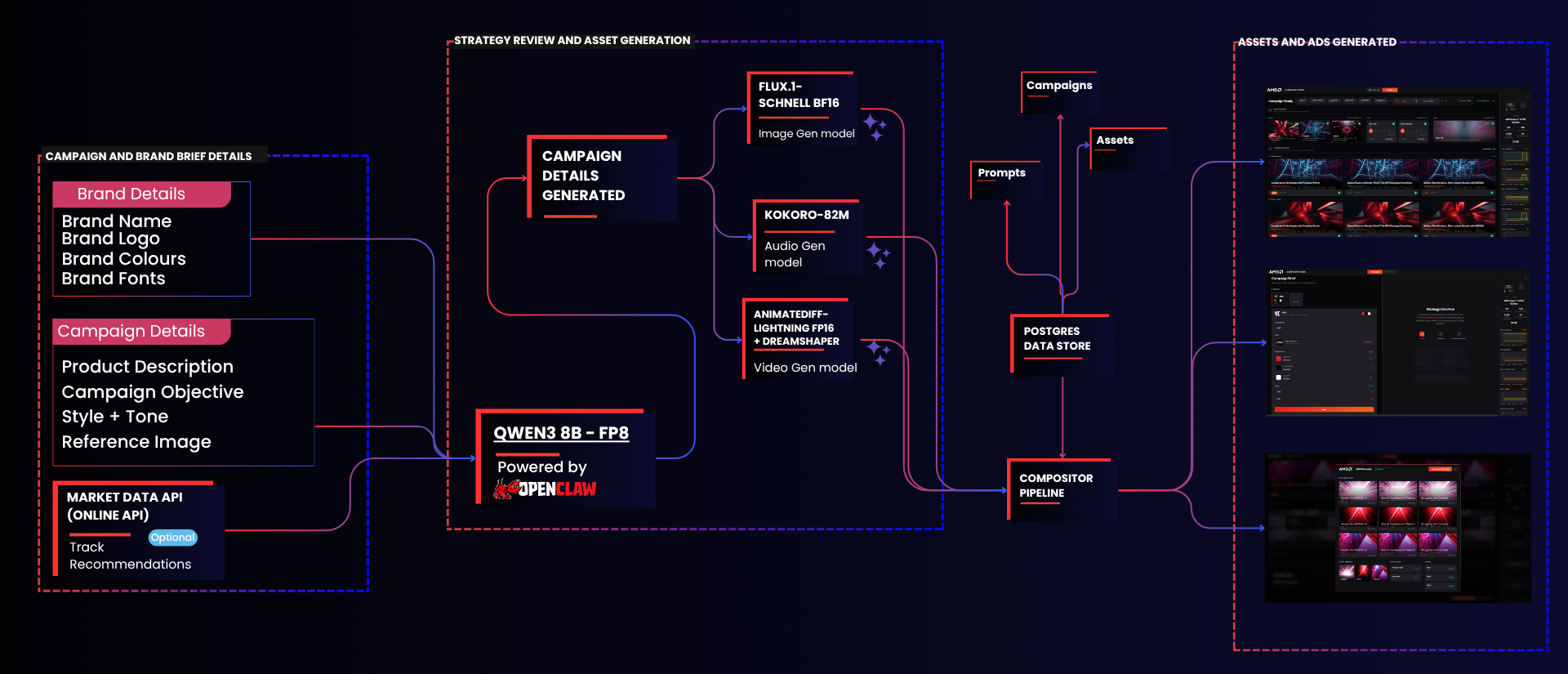
Figure 2. Solution workflow, from brand brief through strategy and parallel asset generation to the packaged campaign
The campaign preview brings every asset together before export, so the team reviews the set as a campaign rather than as isolated files. From there the full package downloads as an archive ready for the media plan.
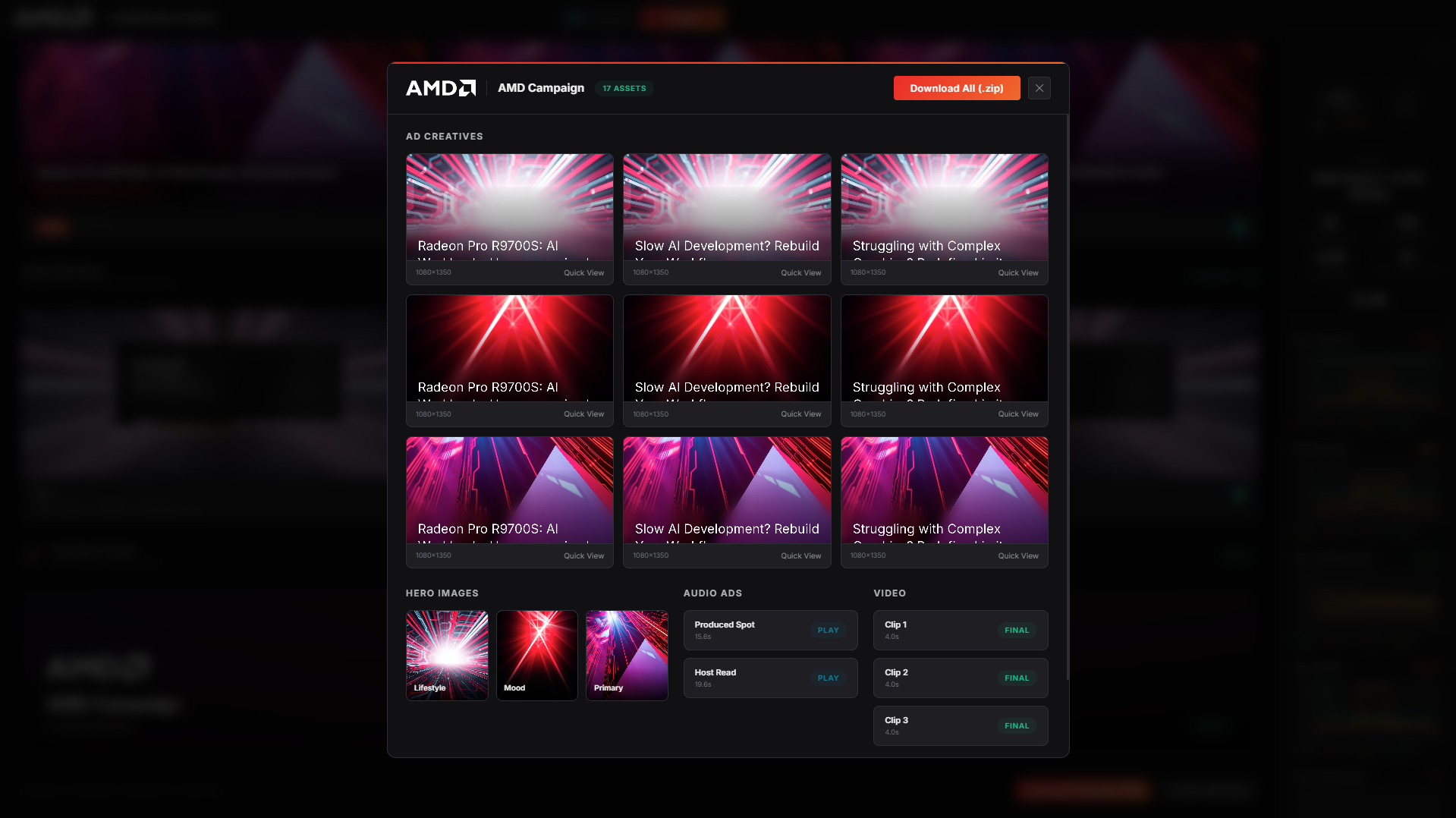
Figure 3. The campaign preview assembles strategy, images, audio, and video for review before export
Solution Architecture
The architecture layers a web interface, an orchestration API, a distributed task graph, a set of local model services, a compositing engine, and a quality gating service on top of AMD ROCm™ and a containerized service stack. A relational database holds campaign and pipeline state, and an object store holds generated assets. Every generation service runs on the local system, and the deployment uses standard container tooling so operations teams manage it with tools they already know.
An optional market data feed can enrich strategy generation with external context. It is off by default, and the campaign pipeline produces a complete result without it.
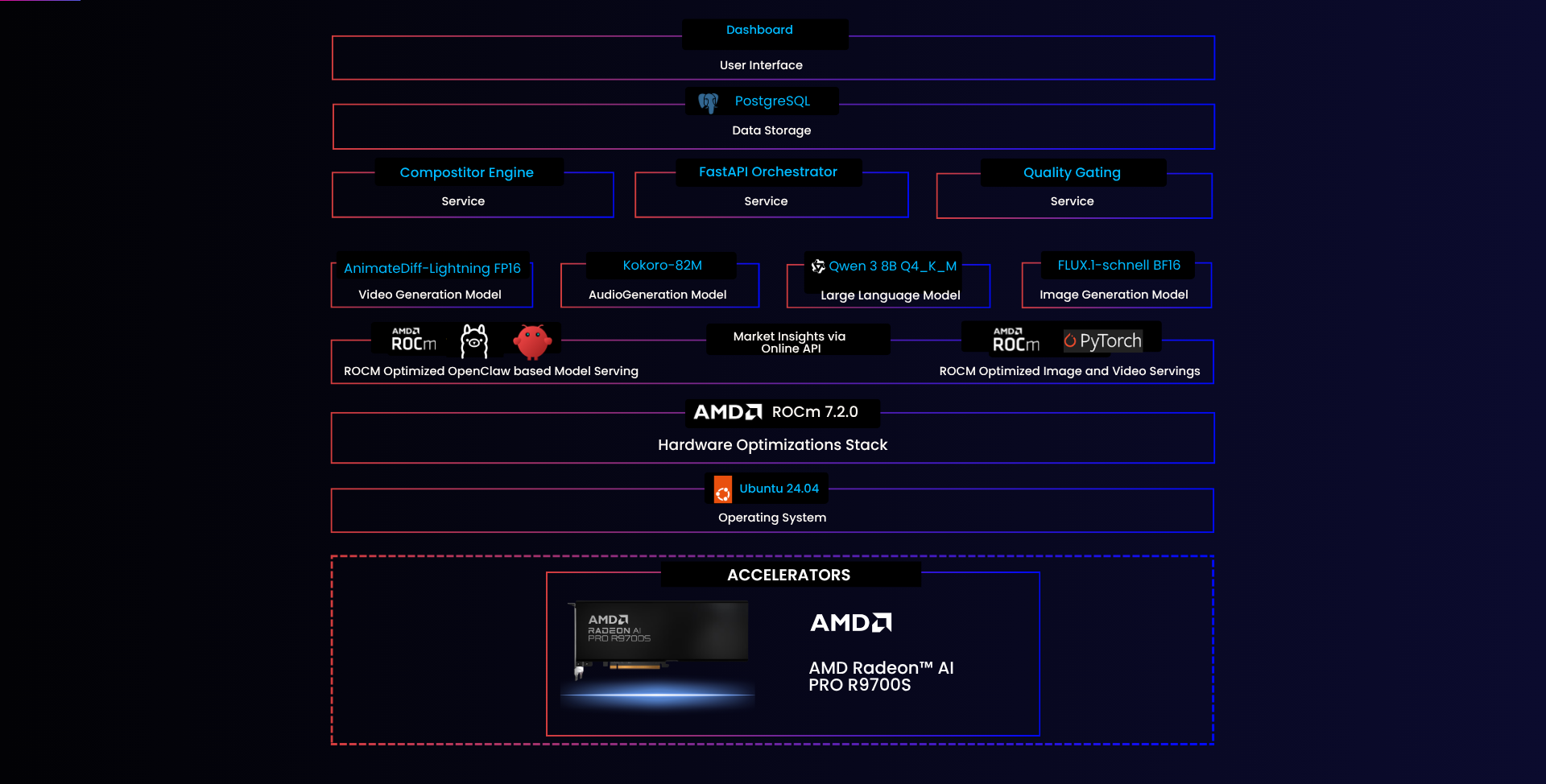
Figure 4. Solution architecture, from hardware and AMD ROCm through model services, orchestration, and interface
Reference Configuration
The following configuration is the recommended starting point for this workload and the system Metrum AI used for the demonstration described in this brief.
| Component | Specification |
|---|---|
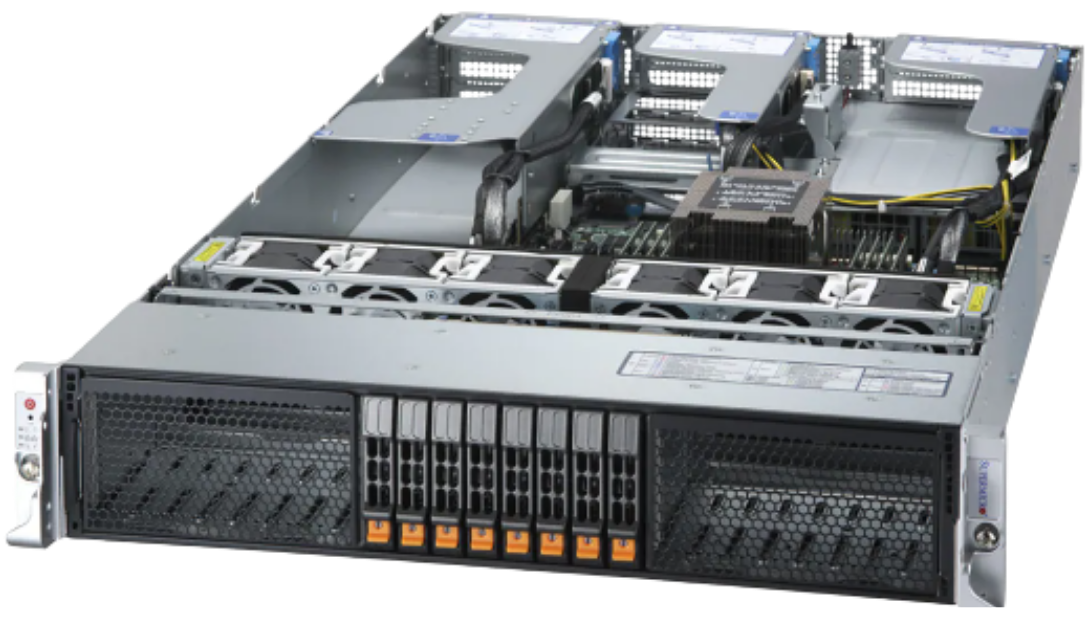
| System platform | Supermicro SuperWorkstation A+ Server AS -2115HV-TNRT, 2U single-processor rackmount workstation with PCIe 5.0 |
| GPUs | 4 x AMD Radeon™ AI PRO R9700S, 32 GB per GPU |
| System memory | 256 GB DDR5. 128 GB is the minimum for the four-GPU configuration |
| Storage | 2 TB NVMe SSD |
| Operating system | Ubuntu 24.04.4 |
| GPU software stack | AMD ROCm™ 7.2 or later |
| Container runtime | Docker Engine 25.0 or later with Docker Compose v2.0 or later |
Table 3. Reference hardware and software configuration used for solution deployment and validation
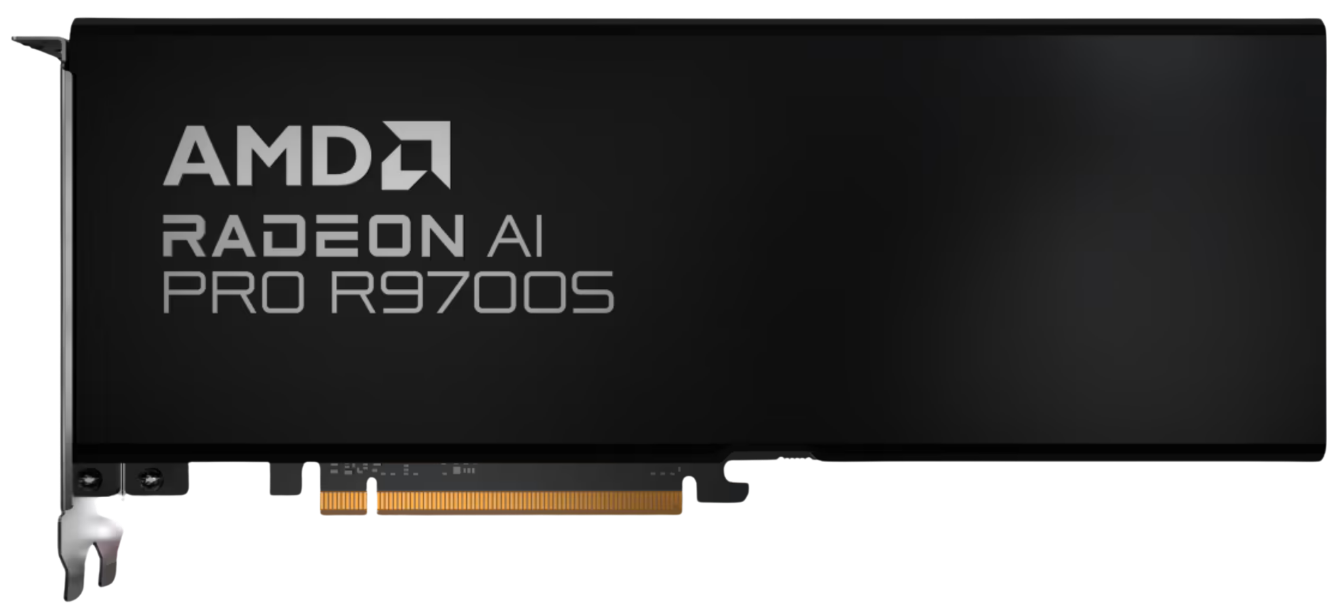
The R9700S is the passively cooled variant of the Radeon AI PRO R9700, built for the directed chassis airflow of a rackmount system rather than the open airflow of a desktop workstation. That is why four of them fit a 2U node.
Deployment Profiles
Setup detects the GPU count and configures the deployment accordingly, so a team can start smaller and add generation tracks as demand grows.
| Configuration | Capabilities Enabled |
|---|---|
| Two GPU | Strategy generation plus one visual track. The deployment runs either image generation or video generation, selected at setup. |
| Three GPU | Strategy generation plus image and video generation, one GPU each, with all three tracks available in the interface. |
| Four GPU | Full configuration. Two parallel image instances roughly halve image generation time while video generation runs concurrently on its own GPU. |
Table 4. Deployment profiles by GPU count in the reference configuration
Business Outcomes
Marketing organizations evaluate creative technology on speed to market, output per budget, and control of brand material. The solution addresses all three.
- The queue time comes out of the calendar. Removing the handoffs between strategy, copy, image, audio, and video eliminates the waiting that dominates a conventional production schedule.
- More variants at no marginal cost. Additional audience and platform versions consume compute the organization already owns, so the media plan drives variant count instead of the production budget.
- Iteration becomes affordable. A change in creative direction regenerates the downstream assets rather than triggering another production cycle, so a team can afford to explore more options before choosing.
- Brand material stays inside the organization. Logos, guidelines, unreleased product detail, and campaign strategy never reach an external service, which satisfies governance review rather than negotiating around it.
- Creative judgment stays with the team. The approval gate between strategy and generation keeps a human decision at the point where brand direction is actually set.
- Predictable economics. Generation runs on hardware the organization owns, so cost does not scale with the number of assets, variants, or attempts.
Deployment Model and Next Steps
The solution deploys as a containerized stack on a single system. A guided setup routine checks prerequisites, detects the GPU count, selects the matching deployment profile, and starts every service. Teams typically move through three phases.
- Validate. Run the reference configuration against a real brief from a recent campaign and compare the generated strategy and assets against what the team produced manually.
- Integrate. Load your own brand presets, including logos, color systems, typography, and tone guidance, then align platform output sizes to your media plan and connect the export into your asset management system.
- Scale. Extend to additional brands and market variants by adding nodes, each running the same containerized stack, and tune the strategy prompts and validation gates to the standards your creative organization applies.
To scope a deployment for your team, or to arrange a walkthrough of the brief, strategy, and generation workflow, contact Metrum AI or your AMD and Supermicro account teams.
Appendix A: Campaign Pipeline Detail
The pipeline runs as a distributed task graph with validation at each stage. The interface reports progress per track, so a team can see which stage is active and which assets have completed.
| Stage | What It Produces |
|---|---|
| Campaign brief | Brand identity, including name, logo, colors, and fonts, plus product description, campaign objective, style and tone selections, and an optional reference image. |
| Strategy generation | Positioning direction, audience segments with demographics, ad copy variants, scene descriptions for visuals, audio scripts, and a soundtrack plan, returned as structured output for review. |
| Image track | Display advertisement images generated from the approved scene descriptions. Two instances run in parallel on the four-GPU configuration |
| Audio track | Voiceover narration generated from the approved audio script, produced on the host processor so all four GPUs stay available for visual work. |
| Video track | Animated video clips generated from the approved scene direction on a dedicated GPU. |
| Compositing and export | Brand overlay application, platform sizing, campaign package assembly, and export as a single downloadable archive. |
Table 5. Campaign pipeline stages and their output
The interface detects which generation services are running and disables unavailable tracks in the strategy review screen, so the team never approves a track the deployment cannot produce.
References
| 1. | AMD. "AMD Radeon AI PRO R9700 Graphics." https://www.amd.com/en/products/graphics/workstations/radeon-ai-pro/ai-9000-series/amd-radeon-ai-pro-r9700.html |
| 2. | AMD. "AMD ROCm Documentation." https://rocm.docs.amd.com |
| 3. | Supermicro. "SuperWorkstation A+ Server AS -2115HV-TNRT." https://www.supermicro.com/en/products/system/superworkstation/2u/as-2115hv-tnrt |
| 4. | Metrum AI. AI Ad Generator solution repository documentation and release notes. |
| 5. | Image sources: campaign brief, strategy, and output captures from the solution repository. Product imagery courtesy of AMD and Supermicro. |
Disclaimers
Performance
Performance varies by hardware and software configuration, including testing conditions, system settings, application complexity, data quantity, batch sizes, software versions, and libraries used. Any performance figures referenced in this document are provided for informational purposes only and should not be interpreted as a guarantee of actual performance. Campaign generation time depends on the tracks enabled, the number of assets requested, and the accelerator configuration in use.
Model Performance Limitations
This solution is a technology demonstration. Generative models produce output that varies between runs and may contain factual errors, off-brand language, visual artifacts, malformed text within images, or content that does not match the requested direction. Generated strategy, copy, and assets require human review before publication. The solution should be treated as a production accelerator for a creative team rather than a replacement for creative and brand approval.
Content, Rights, and Legal
Brand presets, reference imagery, and sample campaigns bundled with the solution are illustrative and are provided for demonstration only. Organizations remain responsible for clearing all generated output before publication, including trademark and likeness considerations, advertising and disclosure requirements in each market, licensing terms of the underlying models, and any obligation to disclose AI-generated content under applicable regulation or platform policy. All materials are supplied as-is without warranties of any kind.
AMD, the AMD Arrow logo, Radeon, ROCm, and combinations thereof are trademarks of Advanced Micro Devices, Inc. Supermicro, SuperWorkstation, and A+ Server are trademarks or registered trademarks of Super Micro Computer, Inc. All other product names are used for identification purposes only and may be trademarks of their respective owners.
METRUM AI INC. 2026 © All rights reserved.