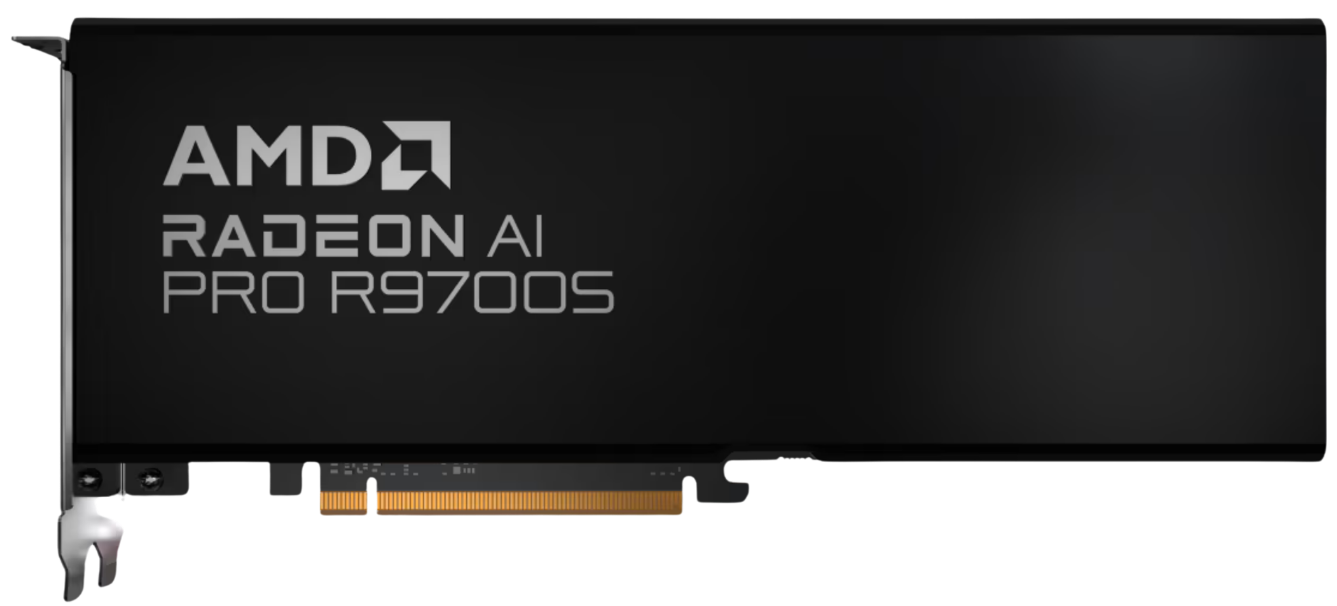
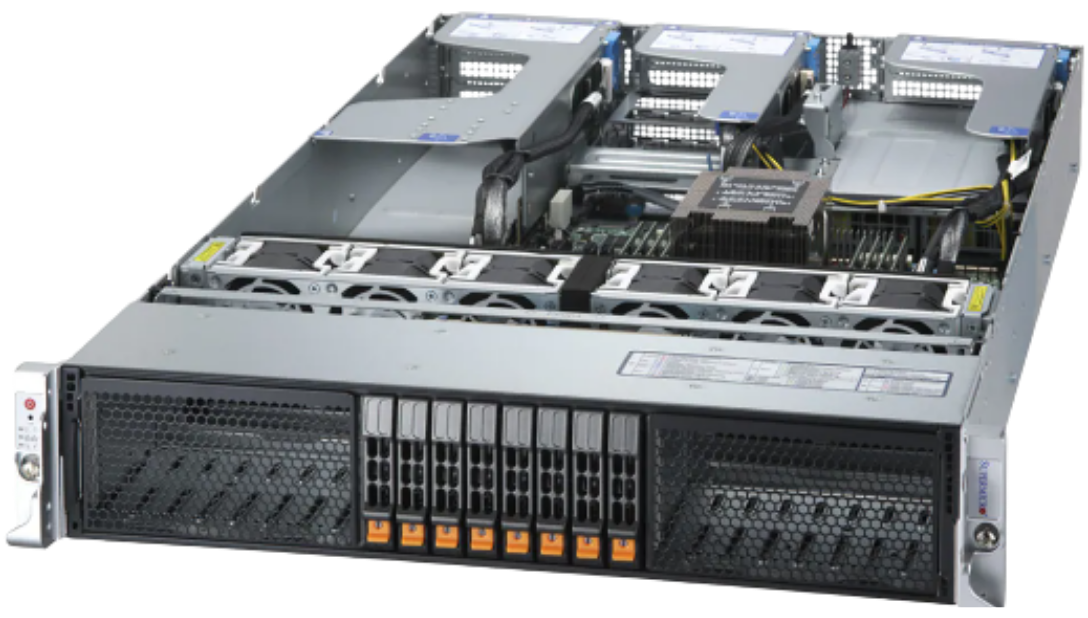
An on-premises, GPU-accelerated driver monitoring, road safety, and incident reporting solution from Metrum AI, deployed on the Supermicro SuperWorkstation A+ Server AS -2115HV-TNRT with four AMD Radeon™ AI PRO R9700S GPUs.
Prepared in collaboration with AMD and Supermicro.
Executive Summary
Commercial fleets absorb the cost of preventable incidents every day. Driver fatigue, distraction, and phone use are well-documented contributing factors in commercial vehicle collisions, yet most operators see the warning signs only after a claim is filed. A telematics system reports where a truck is and how its engine behaves. It says nothing about the driver, the road ahead, or the cargo in the trailer.
Metrum AI built the Fleet Ops solution to close that gap while the truck is still moving. In Metrum AI's demonstration configuration, the solution processes 20 camera streams from five trucks, converts video and telemetry into structured safety events, and correlates those events into risk-scored incidents. An on-premises agent layer then authors a plain-language, fleet-wide Fleet Command Report, which completed in under 15 seconds in that configuration, so dispatch acts on a recommendation rather than a raw video feed.
Everything runs inside the operator's own environment on a Supermicro SuperWorkstation A+ Server AS -2115HV-TNRT fitted with four AMD Radeon™ AI PRO R9700S GPUs and the AMD ROCm™ software stack. Video, driver imagery, and location data stay within infrastructure the operator controls and never reach a third-party cloud. Fleet operators gain three business advantages from that design: earlier detection of unsafe behavior, a defensible incident record for claims and audits, and predictable cost with no per-inference cloud billing.
This brief describes the business problem, the solution, its architecture, and the outcomes fleet operators can expect. It is written for IT directors, CTOs, infrastructure architects, and line-of-business safety and logistics leaders evaluating on-premise AI for vehicle operations. The figures in this brief come from a Metrum AI demonstration on the reference configuration in Table 3, running recorded footage from five vehicles.
The Business Challenge
Commercial trucking runs on split-second decisions. A single lapse in driver attention can become an injury claim, a litigation exposure, and a multi-year increase in insurance premiums. Most fleets still discover that lapse retroactively, from footage reviewed days or weeks later.
Where Fleets Lose Money Today
Safety programs fail for structural reasons, not for lack of effort. Four gaps recur across operators of every size, and each one carries a measurable cost.
| Operational Gap | Business Consequence |
|---|---|
| Unsafe driver behavior goes undetected in the cab | Drowsiness, microsleeps, yawning, and phone use build silently. These behaviors are never seen, never recorded, and never coached. |
| Dispatch has no live view of driver, road, or cargo | Teams respond to emergencies instead of preventing them. Pedestrian proximity, unauthorized activity around parked trucks, and cold-chain excursions surface only after loss occurs. |
| Camera review stays manual and retrospective | Safety analysts spend hours per incident scrubbing footage. Coaching arrives long after the habit has formed, and root cause analysis slows claims resolution. |
| Telematics and video systems remain disconnected | No single record ties driver behavior, location, and cargo condition to one timestamp. Claims defense and regulatory audits become expensive reconstruction exercises. |
Table 1. Recurring operational gaps in commercial fleet safety and their business consequences
Why Cloud-First AI Falls Short for In-Cab Video
Video analytics is the natural answer to these gaps, and many vendors deliver it from the cloud. That architecture introduces three problems that grow with fleet size.
- Bandwidth and cost of egress. Continuous video egress consumes uplink capacity at every vehicle and every terminal, and the volume grows with each truck added.
- Variable cost. Per-inference and per-stream pricing turns a safety program into an operating expense that scales with fleet size, which makes the safety budget a function of the growth rate.
- Loss of custody over sensitive data. Driver-facing imagery and location history leave the operator's control, which raises privacy, works-council, and data-residency questions in many jurisdictions.
Fleet Ops answers all three by running perception, correlation, and reporting on infrastructure the operator already owns. Analysis stays local, cost stays fixed, and driver imagery stays in the operator's custody.
The Market Shift: Prevention Replaces Forensics
Three developments have made local, real-time fleet intelligence practical rather than aspirational.
- Workstation-class GPUs now carry production inference. Four AMD Radeon™ AI PRO R9700S GPUs put 128 GB of aggregate video memory in a single 2U node, enough to run multi-camera perception and local language model serving at the same time rather than in shifts.
- Open-weight models close the capability gap. Compact, efficient models produce useful operational reasoning locally, so report generation no longer depends on a frontier model behind an API.
- Agentic AI turns detections into decisions. Software agents read correlated event data and write the analysis a human previously assembled by hand, so a reviewer starts from a drafted narrative instead of raw footage.
These shifts change what a camera is for. An operator running this model converts a fleet-wide camera investment from an evidence archive into an intervention system.
Solution Overview
Fleet Ops is a fully on-premises solution that turns every truck into a real-time safety sensor. It continuously monitors every camera on every vehicle, transforms live video and telemetry into structured safety events, correlates those events across cameras and time, and applies a multi-agent AI layer to produce clear operational reports.
Two views serve two audiences from the same live data. Fleet Edge presents a per-truck cockpit that combines the driver-facing camera, forward and cargo surveillance, route, cold-chain telemetry, and live GPU status. Fleet Ops scales the same signals into a fleet-wide command center that answers a single question for dispatch: which truck needs attention right now.
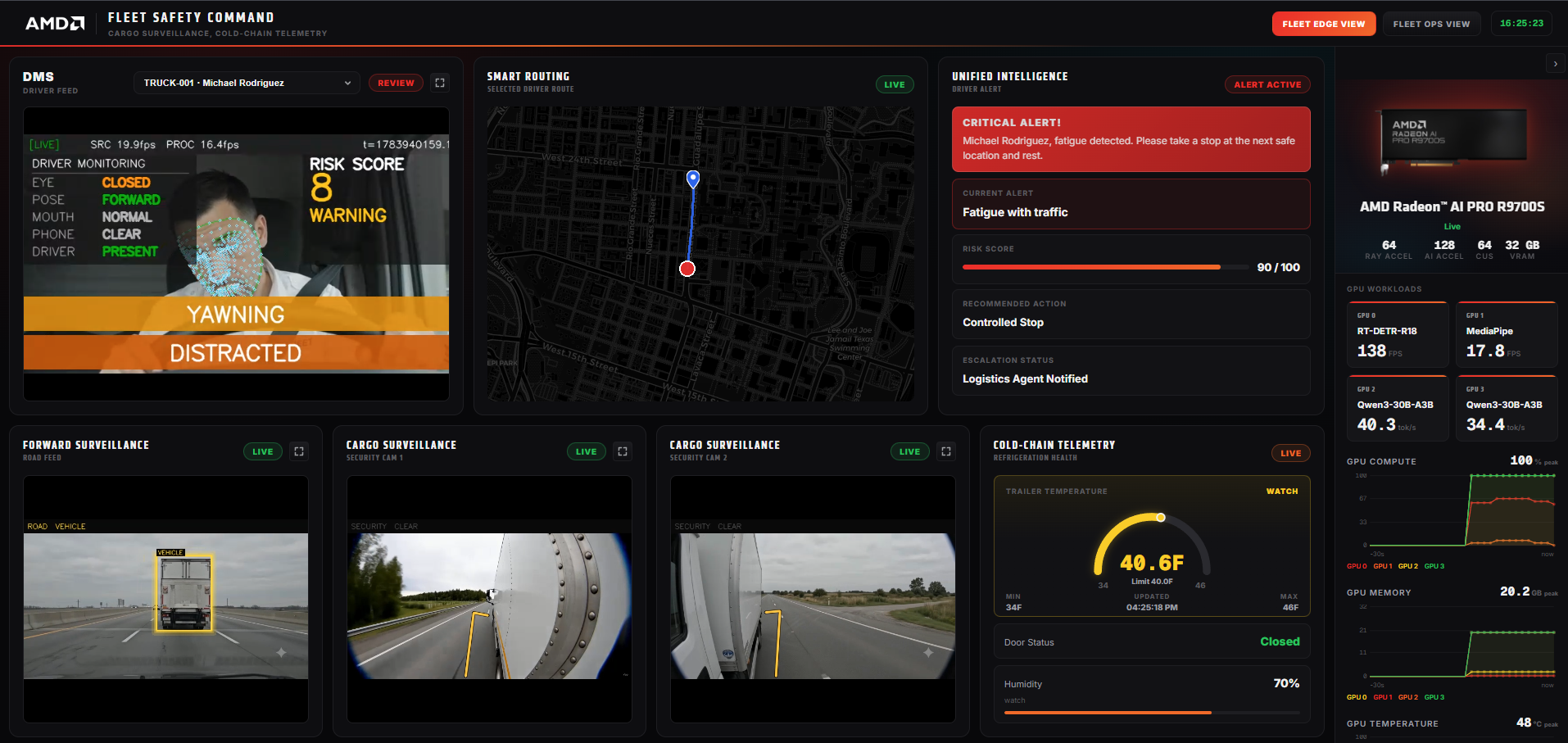
Figure 1. Fleet Edge presents one truck in full detail, combining driver, road, cargo, route, and cold-chain views
Simulated data. Drivers and events depicted are fictitious.
Capability Highlights
| Capability | What It Delivers |
|---|---|
| GPU-accelerated video intelligence | 20 concurrent camera streams across five trucks and four angles per vehicle, processed in real time on four AMD Radeon™ AI PRO R9700S GPUs with the AMD ROCm™ stack. |
| Driver risk detection with in-cab audio alerts | The driver-facing camera tracks drowsiness, microsleeps, yawning, phone use, and head pose. When a threshold is crossed, the system issues a spoken alert in the cab, so the driver is notified at detection rather than at review. |
| Road and security awareness with smart routing | Object detection identifies pedestrians, cyclists, vehicle proximity, and unauthorized activity around the truck. Live road, safety, and cargo conditions feed dispatch routing guidance. |
| Automated incident correlation | A two-stage correlation engine fuses detections across cameras and time into risk-scored incidents, replacing single-camera alerts that lack context. |
| Agentic incident reporting | Software agents convert a read-only alert snapshot into a written Fleet Command Report with recommended actions, so a reviewer starts from a drafted narrative and a recommendation instead of raw footage. |
| On-premise language model serving | A compact open-weight model runs locally through an optimized AMD ROCm inference runtime, so report generation carries no cloud dependency and no external data transfer. |
| Live fleet command dashboard | Fleet Edge and Fleet Ops views scale from a single truck to the full fleet, with annotated video, driver risk cards, agent output, and live GPU telemetry on one screen. |
Table 2. Capability highlights and the operational value each one delivers
How the Solution Works
The solution follows a four-stage pipeline that runs continuously on the local system.
- Capture. A media server ingests camera streams from every truck, and a hardware-accelerated video pipeline decodes them for analysis. GPS and cold-chain telemetry arrive on the same event bus.
- Perceive. Face landmark tracking reads driver state from the in-cab camera while object detection analyzes the forward and cargo views. the AMD Radeon™ AI PRO R9700S GPUs.
- Correlate. A complex event processing engine scores and combines detections across cameras and time. It escalates a fatigue signal in dense traffic differently from the same signal on an empty highway.
- Act and report. An in-cab audio alert notifies the driver.. In parallel, the agent layer reads a read-only snapshot of active alerts and authors the Fleet Command Report for dispatch, with recommended actions and escalation status.
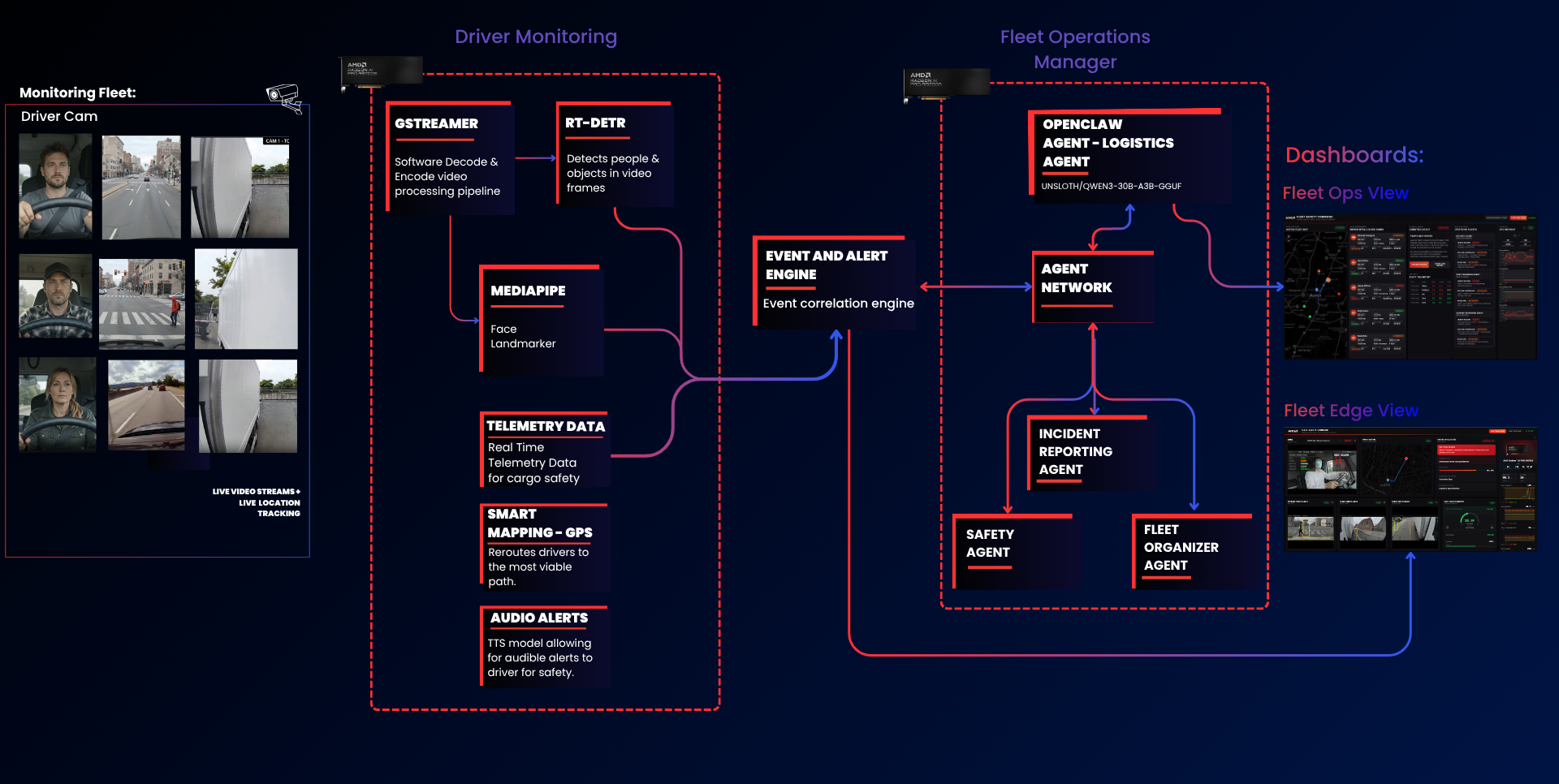
Figure 2. Solution workflow, from live camera streams and telemetry through correlation to agent-authored reports
When a truck crosses a critical threshold, the response is visible across both views. The offending camera feed is highlighted, an alert banner names the driver and the trigger, the recommended action and escalation status populate, and the truck's marker changes state on the fleet map.
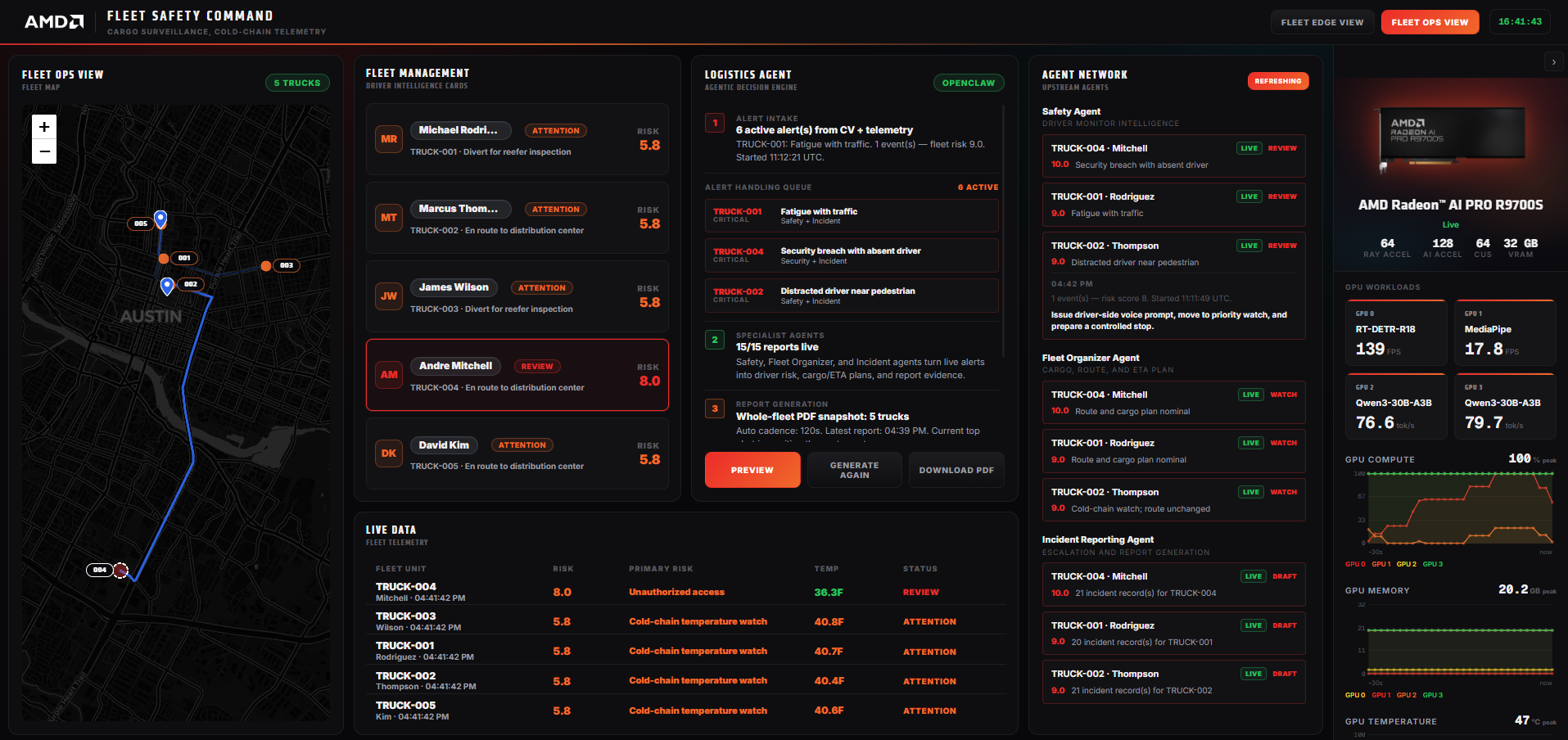
Figure 3. Fleet Ops places the whole fleet on one screen, ranked so the highest-risk trucks rise to the top
Simulated data. Drivers and events depicted are fictitious.
Solution Architecture
The architecture layers a video perception pipeline, an event correlation engine, an agentic reasoning layer, and a web dashboard on top of AMD ROCm™ and a containerized service stack. Every layer runs on the same local system, and the deployment uses standard container tooling so operations teams manage it with tools they already know.
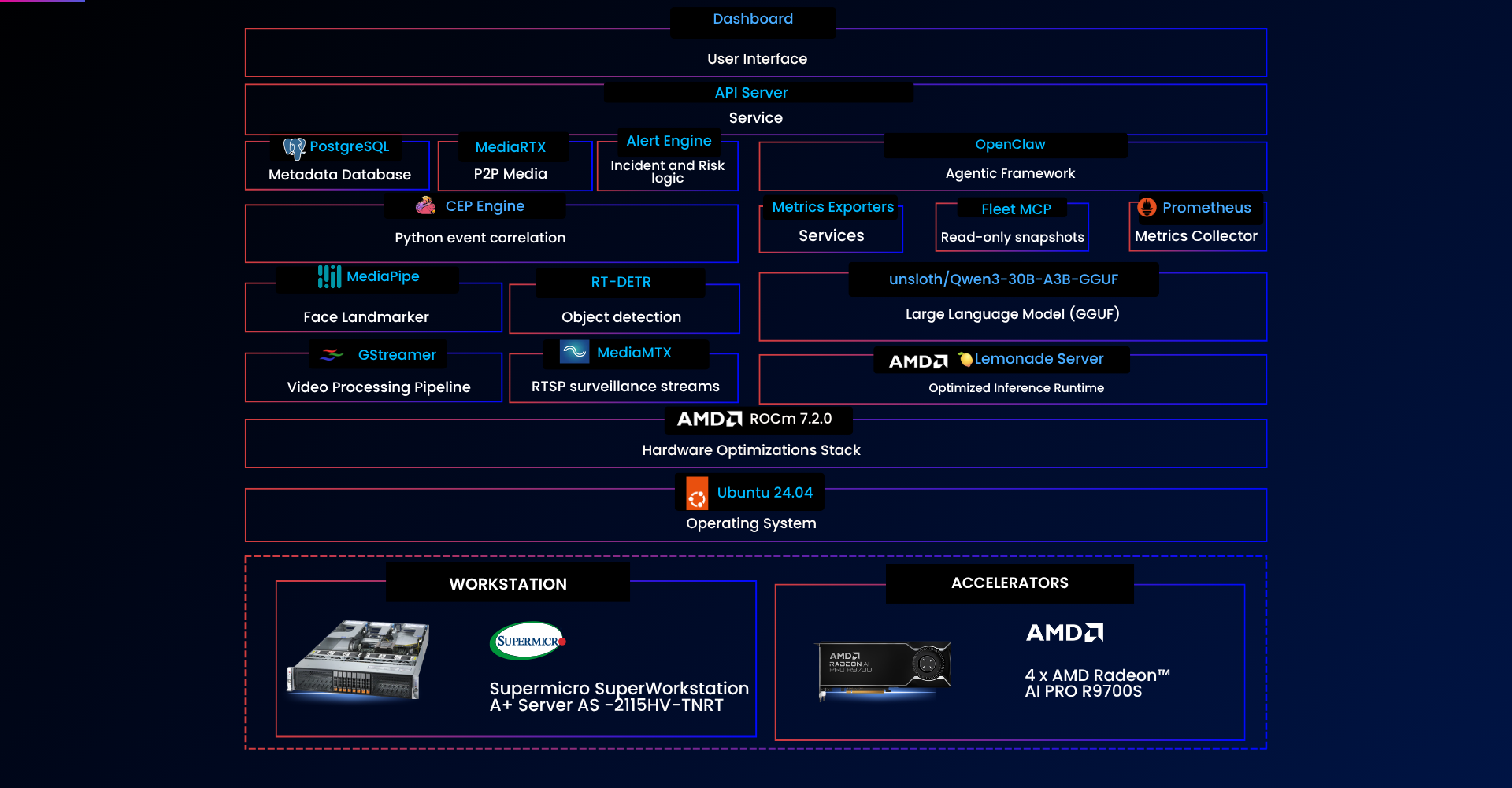
Figure 4. Solution architecture, from hardware and AMD ROCm through perception, correlation, agents, and dashboard
Reference Configuration
The following configuration is the recommended starting point for this workload and the system Metrum AI used for the demonstration described in this brief.
| Component | Specification |
|---|---|
| System platform | Supermicro SuperWorkstation A+ Server AS -2115HV-TNRT, 2U single-processor rackmount workstation with PCIe 5.0 |
| GPUs | 4 x AMD Radeon AI PRO R9700S, 32 GB per GPU |
| Processor | AMD Ryzen™ Threadripper™ PRO series, 96 cores |
| System memory | 256 GB DDR5 |
| Storage | 2 TB NVMe SSD |
| Operating system | Ubuntu 24.04 LTS |
| GPU software stack | AMD ROCm™ 7.2 |
| Container runtime | Docker Engine 24.0 or later with Docker Compose v2.20 or later |
Table 3. Reference hardware and software configuration used for solution deployment and validation
The R9700S is the passively cooled variant of the Radeon AI PRO R9700, built for the directed chassis airflow of a rackmount system rather than the open airflow of a desktop workstation. That is why four of them fit a 2U node.
Business Outcomes
Fleet operators evaluate safety technology on loss avoidance, labor recovered, and cost predictability. The solution addresses all three.
- Detection at the moment of risk. The system alerts the driver when it detects fatigue or distraction rather than surfacing the behavior in a footage review days later. What a fleet does with that earlier signal depends on its own coaching and escalation policy.
- Less manual footage review. Correlated, risk-scored incidents and generated reports give an analyst a drafted narrative and a recommendation, so review time goes to decisions rather than to scrubbing video.
- Defensible records for claims and audits. Driver behavior, location, and cargo condition are captured against a single timeline, which strengthens claims defense and shortens audit response.
- Protected cargo value. Cold-chain telemetry and security detection surface temperature excursions and unauthorized activity while intervention is still possible.
- Predictable economics. Inference runs on hardware the operator owns, so cost does not scale with video volume or per-inference cloud pricing.
- Full data sovereignty. Video, driver imagery, and location data stay within infrastructure the operator controls and never reach a third-party cloud, which simplifies privacy review and supports data-residency requirements.
Deployment Model and Next Steps
The solution deploys as a containerized stack on a single system, and a guided setup routine validates the GPU environment, prepares configuration, and starts every service. Operators typically move through three phases.
- Validate. Stand up the reference configuration and run the solution against representative footage to confirm detection behavior, alert flow, and report quality for your routes and camera placements.
- Integrate. Connect live camera streams, real GPS feeds, and existing telematics or reefer sensors, then tune risk thresholds and escalation policy to your safety program.
- Scale. Extend coverage by adding nodes, each running the same containerized stack, and add agents for the workflows your operation values most, such as coaching, claims preparation, or route compliance.
To scope a deployment for your fleet, or to arrange a technical walkthrough of the Fleet Edge and Fleet Ops views, contact Metrum AI or your AMD and Supermicro account teams.
Appendix A: Agent Layer Detail
The agent layer produces per-driver and fleet-wide analysis on a recurring cycle. Each agent reads a scoped set of live data and returns a structured recommendation, and the results appear inline in the dashboard with no manual step required.
| Agent | Role |
|---|---|
| Safety Agent | Driver safety analyst. Reads recent face and security events, incidents, and alerts, then returns a threat score, a fatigue index, and a movement policy. |
| Fleet Organizer Agent | Route and cargo analyst. Reads route context and cold-chain telemetry, then returns a threat score and a reroute recommendation. |
| Incident Reporting Agent | Consolidates cross-camera incidents and alerts into an escalation view with a recommended operator action. |
| Logistics Agent | Synthesizes every per-driver report into one fleet-wide Fleet Command Report, which can be previewed in the dashboard and exported as a PDF. |
Table 4. Agent roles in the on-premise reasoning layer
References
| 1. | AMD. "AMD Radeon AI PRO R9700 Graphics." https://www.amd.com/en/products/graphics/workstations/radeon-ai-pro/ai-9000-series/amd-radeon-ai-pro-r9700.html |
| 2. | AMD. "AMD ROCm Documentation." https://rocm.docs.amd.com |
| 3. | Supermicro. "SuperWorkstation A+ Server AS -2115HV-TNRT." https://www.supermicro.com/en/products/system/superworkstation/2u/as-2115hv-tnrt |
| 4. | Metrum AI. Fleet Management solution repository documentation and release notes. |
| 5. | Image sources: Fleet Edge and Fleet Ops dashboard captures from the Fleet Management solution repository. Product imagery courtesy of AMD and Supermicro. |
Disclaimers
Performance
Performance varies by hardware and software configuration, including testing conditions, system settings, application complexity, data quantity, batch sizes, software versions, and libraries used. Any performance figures referenced in this document are provided for informational purposes only and should not be interpreted as a guarantee of actual performance.
Model Performance Limitations
This solution is a technology demonstration validated against sample footage. Face landmark tracking and object detection have known accuracy boundaries. Driver monitoring accuracy degrades when the face is occluded, for example by sunglasses, or when the camera angle is extreme. Object detection accuracy varies with lighting, distance, and occlusion. For other video sources or external camera streams, accuracy is not guaranteed and may produce missed detections or spurious alerts. Results should be treated as indicative rather than authoritative.
Data and Legal
Scenario video used in demonstrations is simulated and illustrative. It does not represent real drivers, vehicles, or event footage and should not be relied upon for operational, legal, or real-world decision-making. Deployments that record driver-facing video may be subject to privacy, employment, and data protection requirements that vary by jurisdiction. Operators should confirm compliance obligations before production use. All materials are supplied as-is without warranties of any kind.
AMD, the AMD Arrow logo, Radeon, Ryzen, Threadripper, ROCm, and combinations thereof are trademarks of Advanced Micro Devices, Inc. Supermicro, SuperWorkstation, and A+ Server are trademarks or registered trademarks of Super Micro Computer, Inc. All other product names are used for identification purposes only and may be trademarks of their respective owners.
METRUM AI INC. 2026 © All rights reserved.